


Author: Sabrina Silveira
A Day of Fun, Food and Friendship: Join us for the Willowbridge Spring Social this May!
We’re so excited to invite our clients, participants, and family and friends of Willowbridge to our first annual community event – the Willowbridge Spring Social! The free event, which will take place from 12 p.m. to 3 p.m. on May 30 at 12 Catharine Ave., will offer attendees an opportunity to have fun, eat good food, and enjoy a day of inclusion.
What to Expect at the Event
The afternoon is all about good vibes and great people. We have planned a variety of activities to ensure there’s something for everyone to enjoy, including:
• Free food and drinks: A light meal, lots of snacks, and refreshments.
• Sundae bar: Ice cream with loads of toppings to help beat the heat.
• Live entertainment: Up-close magic with The Magic Man and live music from a local artist.
• Family fun: A bouncy castle, lawn games and an activity station for the whole family.
• Prizes: Enter your name for a chance to win some great prizes.
A Cuddly Visit from Furry Friends
Guests will also enjoy a special visit from Autism Dog Services! We’re so excited for the team to bring along a couple of their cuddliest pals for guests to take photos, have some cuddle time, or to take a calming break from the excitement.
The dogs will only be with us for a short time, so be sure to visit them while they’re around.
An Extra Surprise for the First 100
Additionally, the first 100 attendees to arrive will receive a free tote bag filled with lots of surprises, including treats, swag and coupons.
If you want a free tote, be sure to arrive early and be one of the first 100 guests!
Celebrating Community and Belonging
The Willowbridge Spring Social is the agency’s new, annual event to celebrate community and inclusion. A social event for all ages and abilities, the social was established to create a day where everyone feels they belong.
Whether you’d like to make new friends or want to enjoy some fun in the sun, this is a perfect day for everyone.
Register to Join Us on May 30
We’re so excited to host this new event and would love to have you there! To join us, visit our EventBrite page to register to attend for free!
Event Details
• Date: Saturday, May 30
• Time: 12 p.m. to 3 p.m.
• Location: 12 Catharine Ave., Brantford (at the Knights of Columbus Brantford venue)
• Cost: Free!
• Parking and Transportation: Free parking is available on-site. The venue is located within a walkable distance from a Brantford Transit stop. Brantford Lift is also available for individuals requiring additional accommodation.
• Note: Event will be held rain or shine! While we will move indoors for inclement weather, we invite you to dress accordingly. And don’t forget the sunscreen!
We’re Here to Help
If you’d love to attend but require additional support with registration, don’t hesitate to reach out. Call us at 519.753.4173 or email [email protected] and we’ll be happy to help you!
What families really need from autism support — and why behaviour is only part of the story
When a family comes to us for autism support, they’re rarely starting from the beginning. They’ve already tried the books, the strategies, the advice. They’ve shown up, over and over, and still feel stuck.
Margaret Elson, Manager of Pivot Behaviour Supports at Willowbridge Community Services, has heard this story many times. She leads our behaviour services team and our new autism support programs, and she knows what it actually takes to help families move forward.
It starts with looking outside of just behaviour.
Behaviour is rarely just about behaviour
When a child is struggling, it can be easy to focus on what you can see — the outburst, the shutdown, the refusal. But those moments are usually communicating something deeper.
“A child might be overwhelmed by sensory input, struggling to communicate, coping with anxiety or reacting to expectations that don’t match their developmental stage,” says Margaret. “When those underlying needs aren’t understood, interventions can unintentionally make things harder.”
Willowbridge’s clinical team — including Registered Behaviour Analysts regulated by the College of Psychologists and Behaviour Analysts of Ontario, Registered Social Workers and Psychotherapists — works to understand the reasons behind behaviour, not just the behaviour itself.
“Not by forcing change,” Margaret explains, “but by making success possible.”
There is no standard autism program — and there shouldn’t be
Standardized programs are efficient. But children aren’t standardized.
Two children with the same diagnosis can have completely different strengths, challenges and goals. One may need support communicating emotions. Another may need help participating at school. Yet another child may simply need their environment adjusted so they can succeed.
Individualized goal-setting means therapy focuses on what actually matters to each child and family — not what fits neatly into a template.
“Families come asking for relief, understanding and progress that actually matters in their daily lives,” says Margaret. That’s where Willowbridge starts.
Families shouldn’t have to carry this alone
Many parents describe feeling like full-time case managers — coordinating between schools, doctors and service providers, while still trying to just be a parent.
Margaret describes Willowbridge’s role as “part clinician, part translator and part partner.” The goal is to help families understand what’s happening and build practical strategies that fit into their real routines.
“Therapy doesn’t happen once a week. It happens in hundreds of small moments, every day. And when families feel supported and confident, children benefit in ways that no isolated therapy session could ever achieve.”
Support has to grow as children do
Autism is lifelong. But what a child needs at age 5 looks very different from what they need at 10, 15 or beyond.
Goals are reviewed regularly and adjusted based on what’s working and what’s needed next. The aim isn’t to keep families in services indefinitely — it’s to build skills and confidence so children and families can move forward.
Progress doesn’t always look the way you expect
Sometimes progress is dramatic. Often it isn’t — and that doesn’t make it any less real.
“Sometimes it’s a child asking for help instead of shutting down,” says Margaret. “Participating in a family outing that would have been impossible a few months earlier. Sleeping through the night for the first time in years. Sometimes it’s the parent who says, ‘Our home feels calmer.'”
Progress happens when the environment finally supports who a child already is — not when a child is made to fit a mould that was never designed for them.
The cost of waiting is real
One of the hardest realities of autism care in Ontario is the wait. Families can go months — sometimes years — without support while stress builds and challenges grow.
“Timely access matters — not because children need to be ‘fixed,’ but because they deserve the chance to build skills and confidence before frustration and anxiety take hold,” Margaret says. “Early support doesn’t just help children. It protects family well-being.”
What Margaret wants families to know
If you’re searching for autism services right now, it can feel overwhelming. There’s a lot of information out there, and not all of it connects to your child’s reality.
“Your child is not a checklist,” says Margaret, “and progress is not defined by how closely they match someone else’s expectations.”
The right support helps your child build skills, helps you feel more confident, and makes daily life more manageable. Most importantly, it reminds families of something that often gets lost in the exhaustion of it all: you are not alone in figuring this out.
About Pivot Behaviour Supports at Willowbridge
Willowbridge Community Services offers autism and behaviour support services in Brantford. If you’re interested in enrolling your child in other OAP-approved autism services, browse our website to learn more about our programs, fill out our online enrolment form, or connect with our team by email at [email protected] or by calling 519.753.4173.
Helping Women Build Healthy, Intimate Relationships
Healthy relationships don’t always come naturally. For many women and non-binary individuals, past experiences of intimate partner violence (IPV) or violence against women (VAW) can make it even harder to trust your own judgment when it comes to relationships.
Willowbridge Community Services is offering a free, six-week group — running every Tuesday from March 24 to April 28— designed to help you build the confidence and skills to recognize healthy relationships, set boundaries and make empowered decisions about your own life — at whatever stage of healing you’re in.
A Group Built Around You and Your Journey
The Building Healthy Intimate Relationships group is a free support group for women and non-binary individuals in Brantford who are navigating life after intimate partner violence or are looking to strengthen their relationship skills in a safe, supportive environment. Throughout the six weeks, participants will learn practical tools, engage in meaningful discussion and make genuine connections with others facing similar situations.
What To Expect Each Week
Each weekly session follows a consistent, supportive structure so participants always know what to expect:
• A check-in where participants share a goal they worked on during the previous week
• A focused topic on healthy relationship skills, followed by group discussion, exercises and sometimes paired activities
• A check-out goal to work on before the next session — something connected to the week’s topic or to healthy relationships in general
This approach builds momentum week over week, helping participants grow their confidence and skills at their own pace.
Program Details
The Building Healthy Intimate Relationships group will run weekly on Tuesdays from March 24 to April 28 from 10:30 a.m. to 12 p.m. in Brantford.
Dates: Tuesdays from March 24 to April 28
Time: 10:30 a.m. to 12 p.m.
Location: 54 Brant Ave., Brantford
Cost: Free
Guided by Counsellors
The group will be facilitated by Willowbridge’s counselling team, who will foster a warm and inclusive space where every participant feels safe, heard and supported.
What You’ll Walk Away With
After the six weeks, participants leave with a stronger sense of self-confidence and a clearer picture of what healthy relationships look and feel like. Whether you’re ready to pursue a new relationship, still healing or simply want to better understand your own needs, this group will meet you where you are.
Every outcome is personal, and every step forward matters.
Ready to Join?
This free relationship skills group is open to adult women and non-binary counselling clients. To ensure all participants feel comfortable and safe to engage, we’re limiting space to 12 participants only. If you’re interested in joining, we encourage you to register early by emailing Lori at [email protected].
Additional Support is Available
If you’re interested in receiving one-on-one support, Willowbridge is here to help. Visit our counselling services webpage or contact our Warm Welcome team to learn more and get matched with a counsellor.
Willowbridge Community Services Harnesses Power of AI to Better Serve Community Thanks to $99,200 OTF Grant from Ontario Government
On December 4, a representative from the office of local MPP Will Bouma met with the team at Willowbridge Community Services (Willowbridge) to learn how a $99,200 Seed grant from the Ontario Trillium Foundation (OTF) has helped the agency implement Artificial Intelligence (AI) technologies to improve service delivery.
“Willowbridge Community Services has been providing vital support services to the community for over a century” said Will Bouma, MPP for Brantford-Brant. “This funding will help enhance their service capability and help increase access to community resources for people in need. I am pleased to be a part of a government that supports organizations like Willowbridge, who offer life-changing assistance and help improve lives.”
Thanks to the OTF grant, the Willowbridge counselling team adopted a cutting-edge, privacy-compliant ambient scribe technology that securely transcribes client sessions. The new ambient scribe assists counsellors by automating case notes, assessments and treatment plans, which has significantly reduced administrative work and allowed counsellors to treat more clients. The grant also funded the purchase of ChatGPT and Microsoft CoPilot, along with comprehensive staff training, to assist with document translation and routine clerical tasks such as meeting minutes, document creation and compliance reporting.
“This investment from OTF has allowed us to explore the responsible use of AI to improve both staff efficiency and client experience,” says Leslie Josling, Executive Director of Willowbridge Community Services. “By reducing time spent on paperwork, our team can focus more on what truly matters—helping people.”
Willowbridge is proud to continue investing in resources and tools to improve efficiency, ensuring more people in our community receive the care and support they deserve. The agency will continue adopting AI technology to support staff, improve workflow and enhance service accessibility for its clients and participants.
Willowbridge’s mission is to bring positive change to life in our community through services and supports that ensure no one is left behind. Founded in 1914, Willowbridge Community Services continues to offer culturally responsive and inclusive counselling, developmental services and autism programs to individuals and families across Brantford, Brant County, Hamilton and surrounding areas.
The Ontario Trillium Foundation (OTF) is an agency of the Ontario government with a mission to build healthy and vibrant communities across the province. Last year, OTF invested nearly $105M into 732 community projects and multi-sector partnerships. Projects aim to enhance economic well-being, foster more active lifestyles, support child and youth development, provide spaces for people to come together and connect, and create a more sustainable environment. Visit otf.ca to learn more.
March Break Life Skills Camp: Supporting Brantford Children and Youth with Autism
We’re excited to offer a specialized March Break Life Skills Camp—running March 16-20 in Brantford—focused on helping Brantford children and transitional-aged youth with autism learn important skills while making new friends.
Supervised by a Registered Behaviour Analyst, this unique Ontario Autism Program (OAP)-eligible half-day camp supports children and youth with building practical life skills, independence, emotional regulation and digital safety — all in a fun, safe and supportive environment.
If you’re looking for a meaningful, structured March Break experience for your child, you don’t want to miss out on this opportunity.
What is the March Break Life Skills Camp?
Our new March Break Life Skills Camp offers children and youth aged 9 to 18 years a welcoming space to learn meaningful skills they can use in everyday life — while still enjoying games, activities and social connection.
Throughout the week, participants will work on:
• Practical life skills: Following routines, completing age-appropriate tasks, problem-solving and building independence
• Emotional regulation: Recognizing emotions, practicing coping strategies, managing transitions and handling challenges in positive ways
• Internet and digital safety: Respectful online communication, understanding boundaries, responsible technology use and safe decision-making
Participants will be placed into small groups (based on individual needs), with learning woven into age and needs-appropriate activities and real-life scenarios so skills feel natural, relevant and enjoyable.
Supports are individualized, strengths-based and focused on helping each child feel confident and successful. Children requiring additional support will also receive one-on-one guidance from our team.
Who the Camp is For
While open to all children, our March Break Life Skills Camp is best suited for:
• Children and youth aged 9 to 18
• Individuals diagnosed with autism spectrum disorder (ASD)
• Families enrolled in the Ontario Autism Program (OAP)
Willowbridge is proud to offer this new camp as part of its new autism services, designed to support OAP-enrolled families looking to use Core Clinical funding while accessing high-quality, structured programming close to home.
Program Details
Dates: March 16–20, 2026
Location: 54 Brant Ave., Brantford
Schedule: Half days*
Cost: $175 for the full week**
Group Size: Small groups (up to 8) with individualized supports available
Supervision: Led by Willowbridge’s Registered Behaviour Analysts (RBAs), Clinical Therapists and our Routes Respite team
*Children will be split into two groups (morning or afternoon) based on age as well as individual needs.
**This camp is OAP-eligible. Limited subsidies are also available, depending on need and availability.
Accessible, Affordable and OAP-Eligible
We believe cost shouldn’t be a barrier to accessing high-quality, evidence-informed support. Our March Break Life Skills Camp has been designed to be both accessible and affordable for families.
In addition to being OAP-eligible — allowing eligible families to use OAP funding toward participation — limited subsidies are also available, depending on need and availability.
For only $35 per day, families can access a cost-effective March Break option designed to provide individualized, specialized support for autistic children in a structured, supportive environment.
Why Families Choose Willowbridge
Families value Willowbridge’s focus on safety, evidence-based practice and individualized care. This camp offers:
• Led by Registered Behaviour Analysts, Clinical Therapists and experienced Respite support staff
• Small group sizes with one-on-one support available if needed
• A cost that’s lower than many comparable programs, especially for RBA-led programming
• Eligibility for Ontario Autism Program Core Clinical funding
• A supportive, inclusive environment focused on real-life skill development
How to Register
To create low-stimulation, supportive learning environments, group sizes are limited to a maximum of eight children. With limited space available, families are encouraged to register early.
To learn more or enrol your child, email [email protected] and a member of our team will follow up to complete the registration process and answer any questions you may have.
Supporting Growth Beyond the Classroom
Willowbridge’s March Break Life Skills Camp is part of the agency’s new autism services, supporting growth beyond the classroom by helping children and youth build real-world skills that strengthen independence, confidence and long-term success. This highly anticipated program gives families access to high-quality, accessible care in a safe, supportive environment — close to home.
We’re excited to welcome families to this meaningful March Break experience and look forward to seeing participants learn, grow and thrive.
If you’re interested in enrolling your child in other OAP-approved autism services, browse our website to learn more about our programs, fill out our online enrolment form, or contact us to chat.
Introducing Willowbridge’s OAP Core Clinical Services: Supports that Grow with Your Child
What Are OAP Core Clinical Services?
Why choose Willowbridge?
We’re ready when you are
Men’s Counselling Link: Accessible Support for Men’s Mental Health
Across Canada, many men face challenges such as stress, relationship difficulties or low mood. Research shows men are less likely to seek professional help and often delay reaching out. Barriers such as stigma, social expectations and limited access to services can make that first step difficult.
To help address these barriers, the Government of Ontario in collaboration with 211, Family Service Ontario and community agencies like Willowbridge, created the Men’s Counselling Link — a free program designed to make counselling more accessible, practical and responsive to men’s experiences. To book a free session, individuals simply need to dial 2-1-1 on their phone and ask to schedule a Men’s Counselling Link session.
Why the Men’s Counselling Link was created
Due to stigma, expectations around masculinity and a lack of easily accessible services, men are statistically less likely to consider going to therapy while being more likely to delay seeking help.
Recognizing the increasing need for accessible mental health supports for men across Ontario, the Men’s Counselling Link was launched. This is a free, specialized single session program for men 16+ to help build healthier relationships with themselves and others.
Understanding that men may experience emotional, mental health and relational challenges differently, it is important for Willowbridge to be a part of this initiative and provide a space where men can access help in ways that meet their needs and preferences.
To offer more accessible ways to receive support, Willowbridge is offering monthly Men’s Counselling Link walk-in days, from 12:30 p.m. to 3 p.m. on the last Tuesday of every month. By offering walk-in sessions, Willowbridge is making it easier for men to talk to a counsellor when they need it most — without waiting weeks for an appointment. This model supports men in moments when they think, “I need to talk now.”
What makes this program unique
Men’s Counselling Link sessions are:
• Designed for Men – Our therapists have years of experience supporting men dealing with various life challenges, including anger and challenging emotions, work stress, relationship problems and life transitions. We individualize each session to ensure each person leaves with the best tools to support them on their healing journey.
• Action-focused – Each client leaves with a short-term plan or strategy they can start using right away, with options for follow-up support, if needed.
• Non-judgmental – Our counsellors work with clients in a safe, understanding environment that’s free of judgment and bias. We understand the pressures and challenges many men face, including work demands, family responsibilities and stress, and will never intentionally make you feel uncomfortable for sharing your experiences and feelings.
• Confidential – All sessions are completely confidential*, so clients can always feel comfortable discussing what they’re experiencing in a safe space.
The program combines practical tools and open conversation in a supportive environment that respects men’s lived experiences.
What to expect from a session
Each session begins with a short intake followed by a confidential meeting with a counsellor who specializes in men’s issues. Together, the client and therapist identify one or two areas to focus on, such as workplace stress, relationship tension or a recent life transition.
The counsellor helps the client set a small, achievable goal and develop a personalized plan for moving forward. By the end of the session, clients leave with a clear next step and, if needed, options for follow-up support.
Why choose a walk-in session
Through the program, Willowbridge hosts free men’s counselling walk-in hours between 12:30 p.m. and 3 p.m. on the last Tuesday of every month.
Walk-in therapy reduces barriers to accessing help. There’s no need to plan ahead or wait weeks for an opening — clients can drop in when they feel ready to talk.
For some, a single, one-time session feels less intimidating and more manageable than committing to ongoing therapy. It allows men to seek support when they need it most, without pressure or expectation of long-term participation. If you’re interested in a walk-in session, visit our events calendar to look for our next walk-in day.
Common concerns addressed
Men’s counselling supports a wide range of concerns, including:
• Workplace stress or burnout
• Relationship or family conflict
• Life transitions such as becoming a parent, separation or retirement
• Feelings of isolation or low mood
• Difficulty expressing emotions
• Challenges with self-care, sleep or substance use
• Grief and loss
Counsellors focus on understanding what’s happening right now and identifying practical ways to manage or improve the situation.
How the program helps men move forward
The Men’s Counselling Link emphasizes practical strategies and concrete actions. Sessions may include communication tips, stress-management techniques or coping tools tailored to each person’s situation.
These tools help men take meaningful steps toward change while developing confidence in managing challenges. Each plan is built collaboratively to ensure it feels realistic and achievable.
Supporting healthier relationships and communities
As an individual gains clarity about their emotions and needs, they often notice positive changes in their relationships. Improved self-awareness can lead to better communication, greater patience and stronger connections with family, partners and friends.
Over time, this contributes to healthier households and more supportive communities. When an individual feels empowered to seek help and care for their mental health, everyone benefits.
For those unsure about counselling
It’s natural to feel uncertain about counselling, especially if it’s a new experience. A single session doesn’t require a long-term commitment — it’s simply an opportunity to talk with a trained counsellor in a private, supportive setting.
Counselling is a judgment-free space. Clients can share as much or as little as they’re comfortable with. Counsellors are there to listen, offer perspective and help identify practical next steps.
Why it matters
The Men’s Counselling Link encourages men to reach out early — before challenges become overwhelming. It’s designed for anyone thinking, “Something feels off; I just want to talk.”
By creating easier access to timely, action-oriented counselling, Willowbridge aims to support men’s well-being and strengthen the overall health of families and communities.
How to Book a Session
To book a Men’s Counselling Link session, simply call 2-1-1 on your phone and ask to schedule an appointment. The 211 team will work with you to find the earliest session that works for your schedule. Men’s Counselling Link walk-in sessions will also be available on the last Tuesday of every month from 12:30 p.m. to 3 p.m. — just drop in to meet with a compassionate counsellor.
We’re ready to support you. Call 2-1-1 to book a session today.
*Confidentiality has limits. Counsellors are legally required to contact authorities if someone is at risk of harming themselves or others, if a child or vulnerable person is at risk of abuse, or if records are subpoenaed by court order.
A Sneak Peek at Our New Autism Services
We’re so excited to soon be offering Ontario Autism Program (OAP)-approved core clinical services for children, youth and families in Brant County, Haldimand/Norfolk, Six Nations of the Grand River and the Mississaugas of the Credit First Nation.
Our new website with full program details and enrolment information will launch shortly — but for now, here’s a sneak peek at what’s to come:
OAP-Approved Core Clinical Services

-
Applied Behaviour Analysis (ABA) Therapy: One-on-one and group-based skill-building in communication, independence and daily living.
-
Therapeutic Day Programs: Half-day, full-day and after-school options the blend academics, social skills and emotional regulation.
-
Counselling and Psychotherapy: Mental health supports to build resilience, coping skills and well-being.
-
Group Programs: Social skills groups, special interest clubs and executive function bootcamps.
-
Family and Caregiver Support: Coaching, behaviour consultation and OAP navigation.
Why Choose Willowbridge?
At Willowbridge, we know every child’s journey is unique. That’s why our OAP-approved services are:
-
Family-Led & Individualized — Plans are co-created with families so support truly fits your child’s needs.
-
Strength-Based & Real-Life Focused — We build on each child’s abilities with strategies they can use at home, school and in the community.
-
Compassionate & Trauma-Informed — Care is delivered by qualified professionals who value safety, relationships and emotional well-being.
-
Flexible & Inclusive — From early years to adolescence and transition to adulthood, services grow with your family.
Together, these values shape programs that empower children and families while making sure care fits real life.
What’s Next?
In the coming weeks, we’ll launch our website with full program details, fees and funding information and enrolment instructions. Stay tuned to our newsletter to be the first to learn more about the program and when to enrol.
Our autism services will officially launch in January 2026.
While you wait to hear more about our autism services, be sure to stay connected with the greater Willowbridge community. Join our Beneath the Willow: Autism Services newsletter mailing list to stay up to date on news, resources and upcoming events. You can also follow us on Facebook, Instagram and LinkedIn to keep connected in real time.
Community Support Month: How Willowbridge Brings Positive Change to Life
At Willowbridge, we’re proud to support our community. Every day, our team walks alongside children, adults and families by providing, developmental services, respite care and coordination that help people thrive.
This Community Support Month, we’re celebrating the impact of these services and the generosity that makes them possible.
The impact in numbers
 In 2024–2025, Willowbridge supported 2,821 community members across Brantford, Brant County, Hamilton and beyond. Together, our teams delivered:
• 1,795 counselling sessions for individuals, couples and families
• 430 service coordination supports through EnCompass, helping families access housing, medical, government and community services
• 93 respite opportunities through Routes Respite, creating space for independence, learning and connection
• 39 autism supports through the Ontario Autism Program’s Urgent Response Service, with expanded services launching soon
Behind every number is a story of someone gaining strength, skills and support when they needed it most.
Programs that make a difference
Donor generosity and grant funding fuel programs that change lives. Over the past year, we:
• Opened Java Junction, an in-house café where Routes participants practice baking, money handling and customer service
• Launched the Art of Identity program, helping individuals explore identity through creativity
• Expanded low-cost counselling services with support from the Ontario Trillium Foundation, making care more accessible to families with low incomes
• Introduced the Extensive Needs Service, a partnership providing trauma-informed wraparound care for children and youth with complex needs
These programs show how Willowbridge adapts to meet evolving community needs—always with compassion, inclusion and dignity at the heart of our work.
Looking ahead
Willowbridge’s future is about growth, accessibility and innovation.
We’re preparing to launch in 2026, closing long-standing gaps in care for children and youth with autism. At the same time, we’re laying the groundwork for the Riverside Hub—a one-stop space where individuals and families can access multiple services under one roof.
We’re also leading the Safe Relationships and Your Rights Project, a province-wide initiative to prevent gender-based violence and create safer futures for people with intellectual and developmental disabilities. And as we grow, we’re exploring artificial intelligence to enhance services, reduce administrative burdens and better meet community needs.
With your support, these initiatives will expand what’s possible for thousands of children, youth, adults and families who rely on Willowbridge every day. To stay up to date on what’s happening at Willowbridge, be sure to sign up for our Beneath the Willow and Beneath the Willow: Autism Services newsletters.
Why your support matters
As one participant shared: “I don’t know where we would be without the services provided through Willowbridge. They have and still provide invaluable help and resources!”
Your support ensures Willowbridge can continue to be that vital community support for children, youth, adults and families.
This Community Support Month, there are many ways you can help Willowbridge continue bringing positive change to life. You can make a gift to support children, adults and families in our community, refer our services to someone who may benefit, or follow and engage with us on social media to help spread the word.
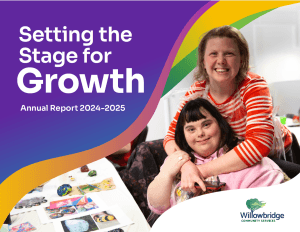
To see even more of the impact your support makes, explore our 2024-2025 Annual Report for highlights, stories and a closer look at how Willowbridge is setting the stage for growth.
Suicide Prevention Month: How to Spot the Signs and Support Someone in Crisis
In Canada, about 4,500 people die by suicide each year, and more than one million others struggle with self-harm, suicide attempts, suicide plans or serious thoughts of ending their life. These figures are concerning, and they remind us how important it is to strengthen support and prevention efforts.
September is Suicide Prevention Month—an important reminder of the public health crisis affecting our communities and the vital role each of us can play. Whether or not you know someone who’s struggling, the information below can help you recognize the signs, offer support and connect someone to life-saving help.
Spot the signs of someone who may be struggling
Recognizing the warning signs is a vital way to potentially save a life. Recognizing the warning signs is a vital way to potentially save a life. These indicators are commonly remembered using the acronym IS PATH WARM, which highlights 10 possible signs that someone may be at risk of suicide:
I – Ideation: Talking or writing about suicide or wanting to die
S – Substance abuse: Heavily drinking or using drugs
P – Purposelessness: Expressing that life has no meaning or purpose
A – Anxiety: Severe anxiety, agitation or inability to cope
T – Trapped: Feeling there is no way out of a situation
H – Hopelessness/helplessness: Believing things will never get better
W – Withdrawal: Avoiding friends, family or usual activities
A – Anger: Rage, irritability or inability to control anger
R – Recklessness: Engaging in risky or dangerous behaviours
M – Mood changes: Sudden shifts in mood, from extreme sadness to sudden calm
If you recognize these signs, it’s an opportunity to check-in and intervene.
What you can do if you believe someone may be thinking about suicide
An important step you can take is talking—and most importantly, listening—to someone with compassion and without judgment. The Suicide Crisis Hotline notes that talking about suicide does not increase risk. In fact, asking directly can reduce distress and feelings of isolation.
Here’s what you can do:
• Ask directly: “Are you thinking about suicide?”
• Actively listen: Let them share without interruption or judgment.
• Keep them safe: Stay with them if there’s immediate risk; remove objects that could cause harm.
• Offer resources: Suggest crisis lines, a doctor’s appointment or reaching out to supportive friends/family.
• Make a plan: Help create a short-term safety plan and encourage long-term supports such as counselling.
• Call 9-1-1: If there is immediate danger, call emergency services right away.
Remember: you cannot “fix” someone’s problems. What you can do is listen, validate their feelings and connect them with professional help.
Who’s most at risk?
Suicide can affect anyone. But some groups face higher risk. The Government of Canada reports that middle-aged men are at the highest risk of dying by suicide, while young women aged 10 to 19 experience the highest rates of hospitalization for self-harm.
Research also shows that individuals under the age of 65 with lower levels of education and who have never been married face higher risk. The Government of Canada has also found that people who identify as 2SLGBTQIA+ are more likely to experience suicidal thoughts, plans and attempts compared to heterosexual and cisgender individuals.
Crisis support resources
If someone is in immediate danger, always call 9-1-1. If there isn’t immediate danger, here are professional resources that can help:
• Suicide Crisis Helpline: Call or text 9-8-8, or visit 988.ca
• ConnexOntario: Call 1-866-531-2600, or visit connexontario.ca
• Kids Help Phone: Call 1-800-668-6868 or text CONNECT to 686868
• SOAR Community Services (Brantford): Call 519.759.7188
• COAST (Hamilton): Call 905.972.8338
You are not alone
You can’t solve someone’s struggles for them—but you can show empathy, listen without judgment and encourage them to connect with professional help.
At Willowbridge Community Services, we believe everyone deserves safe, inclusive and affirming counselling. We offer counselling services for children, youth, adults, couples and families. If you or someone you love is struggling, we’re here to help. Learn more at willowbridge.ca/counselling-services.
Sources
World Health Organization. Suicide. who.int/health-topics/suicide. Accessed August 2025.
Canadian Association for Suicide Prevention. Research and statistics. https://suicideprevention.ca/im-concerned-about-someone/. Accessed August 2025.
Government of Canada. Key statistics: Suicide, self-harm, and suicide-related behaviours in Canada. https://health-infobase.canada.ca/mental-health/suicide-self-harm/. Accessed August 2025.
Government of Canada. Suicide in Canada: Key statistics. canada.ca. Accessed August 2025.
9-8-8: Suicide Crisis Hotline. Facts about suicide. https://988.ca/understanding-suicide/facts-about-suicide. Accessed August 2025.